

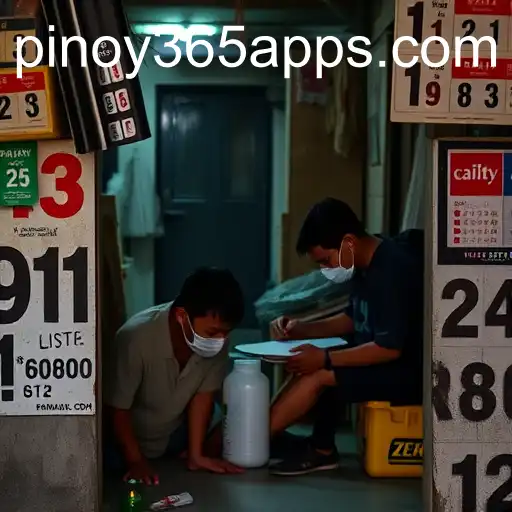

Jueteng is a grassroots numbers game that has long been a part of Filipino culture. Despite its illegal status, it continues to thrive across the archipelago, often under the radar yet fully ingrained in local communities. This article takes a deep dive into this enigmatic lottery system that grips the Philippine roots and explores its dynamics under the keyword PINOY365.
Jueteng finds its origins deeply embedded in the history and culture of the Philippines. Introduced during the Spanish colonial period, the game evolved from the Chinese lottery system and adapted to the sensibilities and context of the local population. The term "jueteng" itself is derived from the Spanish "juego" meaning game, combined with the Hokkien word "teng" meaning chance, reflecting its multicultural roots.9UFUN
This lottery-type game involves betting on a set combination of two numbers, typically ranging from 1 to 37. The draw occurs daily, with jueteng collectors or "kubradors" facilitating the process by collecting bets from neighborhoods and delivering winnings. Over time, jueteng has developed an almost cyclical relationship with the authorities and local communities, adapting continuously to evade legal scrutiny.
Understanding jueteng involves examining its simplistic yet sophisticated mechanics. On the surface, players pick a pair of numbers and place their bet with a kubrador, who then passes the numbers and collective bets up to a coordinator known as a "cabo." The cabo organizes the takings, preparing for the number draw managed by the higher-ups or “bukis.”
Winning numbers are drawn daily in clandestine locations, with winnings distributed promptly through the intricate web of operatives. The numbers themselves hold a mystique, with many bettors relying on combinations informed by dreams, omens, or numerological beliefs, adding an element of superstition to the game.
Despite its illicit status, jueteng's impact on Filipino society is undeniably profound. It extends beyond economics, playing a pivotal role in the social dynamic of communities. Often viewed as a social equalizer, jueteng affords opportunities for individuals across economic strata to engage in shared experiences, with shifts in luck and fortune serving as collective narratives.
For many locals, jueteng acts as an informal financial support system. It creates livelihoods for thousands who engage in its operations, from kubradors to higher-level organizers. This economic lifeline contributes to its persistent appeal, providing a semblance of stability and financial hope to communities otherwise devoid of opportunities.
Jueteng has long danced delicately with the Philippine legal system, occupying a contentious space within the national conversation. Its illegal status stems from the nation’s efforts to manage legal gambling entities and curb organized crime. Yet, crackdowns have mostly been symbolic, with the real operations largely remaining untouched.567JL
Efforts to legalize and regulate jueteng have surfaced sporadically, often met with mixed reactions from both the public and legal entities. Proponents argue for regulation as a means of injecting revenue into public coffers while simultaneously curbing corruption and criminal activities associated with underground operations. Opponents, however, stress the moral implications and societal risks linked to such integration, fearing the perpetuation of gambling culture among vulnerable populations.
Jueteng's ties with Philippine politics further complicate its status. The game has historically served as a power player within political circles, often used as a financial tool supporting political campaigns and maintaining local influence. The entrenched interests make unbiased legislative action challenging, with key political figures benefiting symbiotically from its operations.
Numerous scandals have unfolded over the years, implicating high-profile officials in jueteng operations, showcasing the deep-rooted connections that continue to challenge reformative efforts. These incidents serve as a testament to the game’s pervasive influence, transcending mere play and stepping into the realm of political and social governance.
The debate surrounding jueteng is multifaceted. On one hand, its persistent existence underscores systemic challenges within the Philippines, highlighting socio-economic gaps and governance issues. On the other, jueteng manifests the resilience of cultural practices and the ingenuity employed in the pursuit of communal existence.
How the Philippines chooses to handle jueteng's future remains to be seen, embodying broader themes of legality, morality, and cultural preservation. As the nation grapples with its numerous social and economic intricacies, jueteng remains a microcosm of these challenges, often at the intersection of tradition, necessity, and modernity.

Dive into the captivating world of HacivatandKaragoz, a game that intertwines cultural heritage with contemporary entertainment. Understand its rules, gameplay, and unique connection to current events.

Discover the intricate world of Coinstrike, a captivating game gaining popularity, and uncover its rules, gameplay, and the influence of contemporary events.

Discover the exhilarating world of KingKongShake, the latest sensation captivating players on the PINOY365 platform. Learn about the game's captivating mechanics and dive into the dynamic rules that make it a must-play experience.

Explore the captivating game DrFrankenstein, delve into its gameplay mechanics, rules, and its connection to PINOY365 amidst current events.

Explore the captivating world of CRAZYBUFFALO, a game that merges entertainment with cultural elements, and understand its rules and significance in today's gaming landscape.

Explore the innovative and exciting features of ThunderCoinsXxl, a game that fuses modern technology with classic gameplay. Learn about the game's introduction, its rules, and its impact on the gaming community, particularly focusing on the interest from the Filipino audience through PINOY365.
